Money Stress Isn't About Math
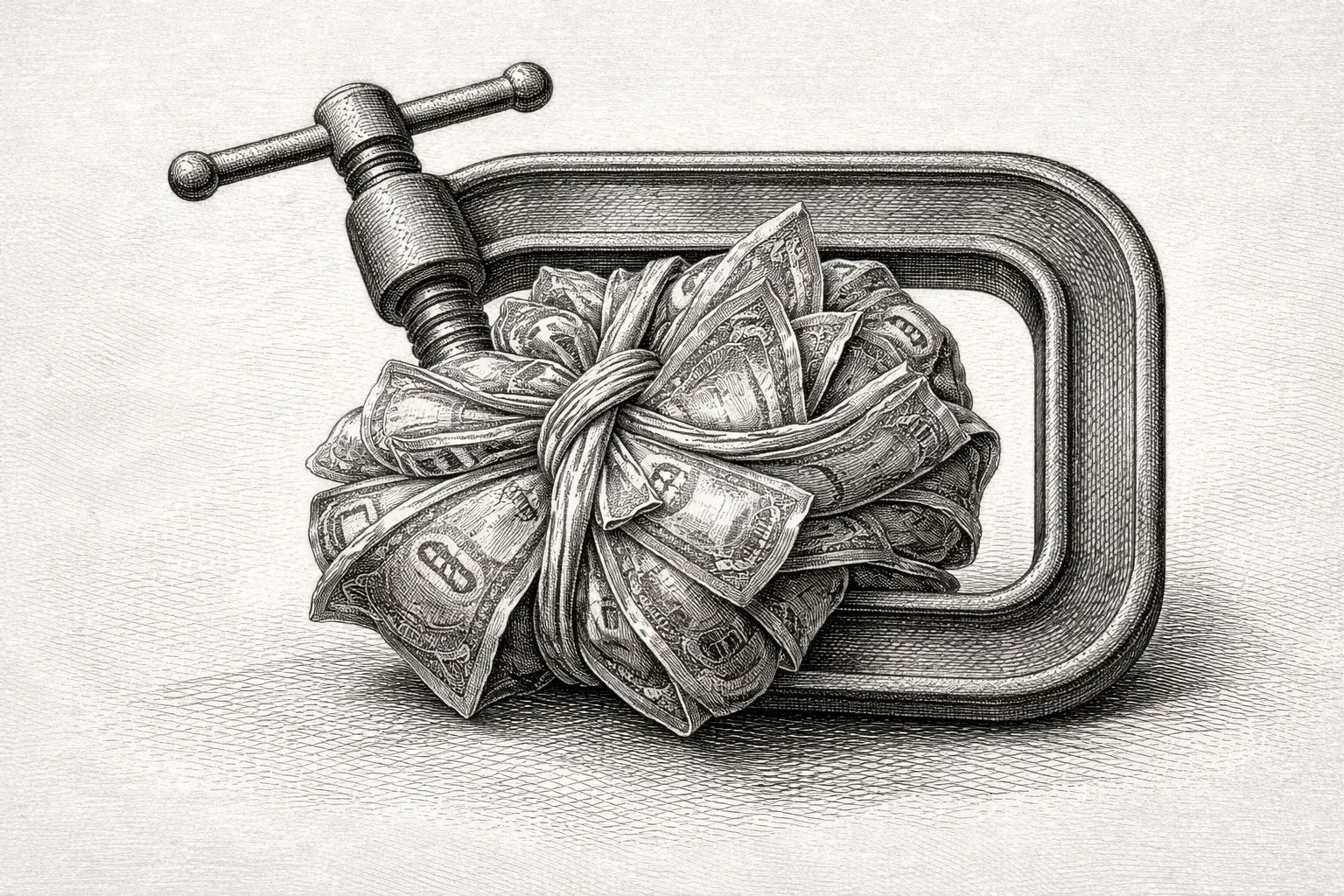
You’ve run the numbers. You know what’s in your account, what’s due this month, and what you need to save. The math adds up—or at least it’s manageable—but the anxiety doesn’t go away. You check your balance multiple times a day. You lie awake thinking about expenses that won’t hit for months. You feel guilty about small purchases even when they fit your budget.
Financial stress isn’t a spreadsheet problem—it’s a nervous system problem.
The Problem
You thought getting your finances organized would solve the stress. So you made a budget, tracked your spending, and set up automatic transfers to savings. You did everything you were supposed to do. And yet, the worry persists.
Maybe you’re earning more than you ever have, but you still feel like you’re one emergency away from disaster. Maybe you have six months of expenses saved, but you can’t shake the feeling that it’s not enough. Maybe you’ve paid off debt, but you still feel the same tightness in your chest when you think about money.
The logical part of your brain knows you’re okay. The numbers prove it. But the emotional part of your brain doesn’t believe the numbers. It’s scanning for threats, catastrophizing about the future, and treating every financial decision like a life-or-death choice.
This disconnect is exhausting. You can’t relax about money because no amount of mathematical security seems to quiet the fear. And you can’t talk about it easily, because admitting you’re stressed about money when you’re “doing fine” financially feels like complaining about nothing.
Why this happens to freelancers and knowledge workers
Money anxiety doesn’t correlate neatly with actual financial circumstances. Research suggests it’s more closely tied to uncertainty, loss of control, and past experiences with scarcity—even if that scarcity was years ago.
If you grew up watching adults stress about money, your nervous system learned that money equals danger. If you’ve experienced a period of real financial instability, your brain remains hypervigilant even after the situation improves. If your income is variable—which is true for freelancers, commission-based workers, and many knowledge workers in volatile industries—your brain interprets that variability as threat.
Many people find that their money stress isn’t about their current situation at all. It’s about the gap between where they are and where they feel they should be. You compare yourself to peers who seem more financially secure. You measure your progress against some invisible timeline. You internalize the message that financial anxiety means you’re failing, which creates more anxiety.
The modern financial landscape also creates new forms of stress that didn’t exist for previous generations. You’re supposed to budget, invest, optimize your credit score, plan for retirement, save for emergencies, and somehow also enjoy your money. Every financial decision comes with the weight of “did I do this right?” because there’s always another article telling you what you should be doing differently.
What Most People Try
The default solution is more financial literacy. Read more books about money, follow more personal finance experts, learn more strategies for investing and budgeting. The assumption is that if you just understood money better, you’d stop being anxious about it.
This can help—knowledge is useful—but it often backfires. The more you learn about optimal financial strategies, the more ways you find to feel inadequate. You’re not investing aggressively enough. Your emergency fund should be bigger. You should have started retirement savings earlier. Financial literacy without emotional regulation just gives you more things to worry about.
Some people try to fix the stress by earning more. If you had a bigger income, surely the anxiety would disappear. But many people discover that their stress scales with their income. When you earned less, you worried about making rent. Now you worry about retirement savings and your kid’s college fund. The numbers change, but the feeling doesn’t.
Others attempt to avoid money stress by avoiding money entirely. They don’t check their balance, don’t open bills, don’t think about their financial situation. This provides temporary relief but compounds the actual problem. Avoidance turns manageable issues into genuine crises.
Many people also try to “fix” their spending, convinced that if they just had perfect discipline, the anxiety would lift. They create restrictive budgets, cut out all discretionary spending, and punish themselves for any deviation. This approach treats money stress like a moral failing rather than an emotional response, and it usually leads to cycles of restriction and guilt.
The issue with these approaches is that they’re all trying to solve an emotional problem with a logical solution. You can’t spreadsheet your way out of financial anxiety any more than you can budget your way out of grief.
What Actually Helps
1. Separate actual risk from perceived threat
Your brain is designed to keep you safe, which means it overestimates danger. When you feel anxious about money, you’re not necessarily responding to actual financial risk—you’re responding to your nervous system’s interpretation of the situation.
Start distinguishing between the two. When you feel money anxiety, pause and ask: what is the actual, concrete risk right now? Not what could theoretically happen if everything goes wrong, but what is actually happening today.
Many people find it helpful to write this down. On one side of the page, list what your brain is telling you: “I’m going to run out of money, I’ll end up homeless, I’m financially irresponsible.” On the other side, list what’s actually true: “I have enough to cover this month’s expenses, I have $X in savings, I spent $Y on something I planned for.”
This isn’t about positive thinking or convincing yourself everything is fine. It’s about teaching your nervous system to differentiate between present reality and future catastrophe. The more you practice this distinction, the less power the catastrophic thoughts have.
2. Build financial buffers for emotional safety, not mathematical optimization
Most financial advice focuses on optimization—maximizing returns, minimizing expenses, getting the best possible outcome. But if you’re dealing with money anxiety, optimization isn’t the goal. Emotional safety is the goal.
This might mean keeping more in your emergency fund than is mathematically optimal, because knowing it’s there helps you sleep at night. It might mean choosing a slightly lower-paying but more stable job over a higher-paying but variable one. It might mean spending money on convenience or support that reduces your daily stress, even if it’s not the most “efficient” use of funds.
Research suggests that the psychological benefit of financial security often outweighs the mathematical benefit of optimal investing. A high-yield investment that keeps you anxious provides less actual life value than a lower-yield investment that lets you relax.
For freelancers and variable-income workers, this often means creating artificial stability. Instead of spending based on what you earned this month, pay yourself a consistent “salary” from your business account. Build a larger buffer specifically to smooth out the income variability. It’s not what a purely rational actor would do, but you’re not a purely rational actor—you’re a human with a nervous system that needs predictability.
3. Address the stress directly, not just the money
If your money anxiety is rooted in your nervous system’s response to uncertainty and past experiences, then addressing it requires nervous system work, not just financial planning.
This might look like: noticing when money thoughts trigger physical stress responses and using grounding techniques to calm your body before making financial decisions. Tracking patterns in when your money anxiety spikes and what else is happening in your life—often it’s not really about money at all. Working with a therapist who understands financial trauma if your money stress is severe or linked to past experiences.
Many people find that their money anxiety decreases dramatically when they treat it as an anxiety issue that happens to be focused on money, rather than a money issue that creates anxiety. The tools that help with general anxiety—mindfulness, somatic practices, cognitive reframing—work for money anxiety too.
This doesn’t mean ignoring your finances. It means recognizing that checking your bank balance for the fifth time today isn’t financial management, it’s anxiety management. And anxiety management requires different tools than spreadsheets.
The Takeaway
You can have your finances completely in order and still feel financially stressed. That’s not a failure—it’s a sign that the stress isn’t about the numbers. It’s about how safe your nervous system feels, how much uncertainty you’re holding, and what money has meant in your life history. Addressing financial anxiety means building actual safety where you need it, learning to distinguish between real risk and perceived threat, and treating the emotional response as valid rather than something to logic your way out of.